Wistron Accelerator FAQ (For Founders Applying to Wistron Accelerator #10)

Wistron has been working closely with AppWorks since 2014 and is one of the major limited partners of AppWorks Fund II and Fund III. It also invested in MoBagel (AW#16), ANIWARE (AW#17), Authme (AW#18),  Aiello (AW#20) , and other alumni who have graduated from AppWorks Accelerator. Wistron and AppWorks have been working closely together and have a long-term strategic partnership, and launched the Wistron Accelerator in September 2021. AppWorks, itself a leading accelerator in Greater Southeast Asia, provides core logistics and operations support.

We put together some frequently asked questions for startup teams who still had questions about the Wistron Accelerator program after reading the information on the landing page. If you have similar questions, we hope you can find the answers below.

[Wistron Accelerator #10 is taking applications now!]

1. What outcomes does Wistron Group expect to achieve through the Accelerator program? What kind of support can Wistron Group provide?

Some domain-specific perks include:

a. Access to C-level Mentors from Wistron Group

The most significant value of this accelerator is that the C-levels of different business units at Wistron Group will serve as your Mentors. Startups in the Wistron Accelerator can directly discuss partnerships and business insights with C-level Mentors at Wistron Group, significantly increasing the chance of collaborative success.

The Mentors participating in the Wistron Accelerator are from the following business units:

  1. Wistron Group (including the CVC team)
  2. Wiwynn
  3. WNC 
  4. Wistron ITS 
  5. WMT 
  6. WiAdvance

People who have experience working with enterprises know that the CEO or C-level manager is usually responsible for the strategy, and their team is accountable for execution. Therefore, if you can directly communicate with high-level managers, you may significantly increase the chances of developing a strategic partnership, new services, and new business.

In addition, even though startups already have domain knowledge in their focus area, when facing different industries and large enterprises, there is still much to learn, including both hard and soft skills.

In the Wistron Accelerator program, Mentors take on the role to solve the aforementioned issues. During the accelerator period, startups will have in-depth collaboration and interaction with the heads of the designated business unit. Startups can further understand companies’ needs, plans, and insights, and learn how to work with large corporations effectively.

b. Exclusive PoC collaboration with Wistron Group

Startups running B2B businesses know that it takes a long time to successfully onboard corporate partners because of the different organizational nature and the longer decision-making processes. It’s very common to take a quarter or even more than six months to kick off a collaboration.

Wistron Accelerator has thoughtfully planned the schedule, process, and goals to speed up the collaboration process. The startups participating in the Wistron Accelerator will directly collaborate with Wistron Group to come up with a PoC. During the program, AppWorks will facilitate the discussion and implementation of the PoC. Startups can develop the minimum viable product (MVP) within the four-month timeline and further discuss more in-depth collaboration after the program.

2. What are the important factors you consider when evaluating applications?

The application review process combines AppWorks’ experience in mentoring startups and Wistron’s industry expertise. We are looking for founders who continuously work on themselves and have a clear North Star in their founder journey, which we believe will help founders overcome obstacles and build up the product’s core competitive advantages. 

The following questions can help you think about whether you are suitable to join Wistron Accelerator:

  • Why did you start your business?
  • What problem do you want to solve? Why?
  • What efforts have you made in solving these problems?
  • How is your product different from existing solutions?
  • What do you expect from the collaboration with Wistron Group? What value can you bring to Wistron Group?

3. Is there a charge for the Wistron Accelerator?  If we need capital now, will we receive investment after joining?

Wistron Accelerator is an entirely free service for founders. We will not ask for rent, service fees, or any types of concessions such as stock, options, revenue, or profit-sharing. At the same time, every enrolled startup will receive a NT$200K subsidy from Wistron, which is not in exchange for any shares.

Wistron has been a bullish strategic investor, in recent years investing more than NT$13 billion with over  60 companies in their portfolio. In 2021, Wistron established a corporate venture capital (CVC) team and is actively looking into strategic investments. Startups selected for the Wistron Accelerator will have the opportunity to discuss further collaboration or investment with Wistron CVC, business units, or its subsidiaries during and after the program.

4. Why does Wistron Group recruit startups only from AI, IoT, cloud, cyber security, education, and medical technology industries?

Wistron is one of the world’s leading manufacturers in the ICT industry. In recent years, Wistron has been investing in R&D, tech innovation, and diversified product development, and has also seized on the growing trend of cloud applications. They have successfully integrated a multitude of hardware devices, software services, and cloud applications, and offer technical service platforms and solutions. During this time they have also expanded their business to new fields like education, corporate services, IoT, and medical care.

Through the Wistron Accelerator, Wistron Group hopes to share its industry experience and rich resources with startups, and to explore innovative opportunities by working on a PoC together. Wistron Group is happy to be one of the case studies for startups to test their B2B solution. Wistron Group also expects to develop growth opportunities for the next decade through this collaboration.

5. What stage of startups is suitable for the Wistron Accelerator?

We do not have a strict standard on the stage of the startup. But we do recommend startups that have experience working with enterprises or have a few proven PoCs to apply. These startups should be able to better utilize the four-month timeline and can reasonably expect a certain level of results from the program.

If you are still in the MVP stage and have not yet defined your target customers, we would suggest you focus on developing your product first, try to get some initial users, collect feedback, and iterate accordingly. Once you validate the problem you want to solve and know the core advantage of your product, that will be a better time to apply for the Wistron Accelerator.

If you already have a product prototype but have not yet established a company, we recommend that you complete the company setup process first. From our experience, it can help you onboard business partners and initiate collaborations more efficiently. 

AppWorks can provide professional accounting and legal services to help founders set up a company, whether you are from Taiwan or overseas.

6. I am not a citizen of Taiwan. Can you help me get a visa?

Wistron and AppWorks can assist international founders enrolled in the Wistron Accelerator to apply for the Entrepreneur Visa, the employment Gold Card or the Business Visa based on certain conditions. Founders from overseas can concentrate on their work without worrying about visa issues.

7. While participating in the Wistron Accelerator, do we have to stay at Wistron Group’s office all day from Monday to Friday?  Can we participate remotely?

We do not stipulate work locations. Every startup will discuss the meeting frequency, and format with the Mentor on a case-by-case basis.

8. The application questions are written in English. Will writing in Chinese affect the score?

Wistron Accelerator’s application has 26 questions, covering team, product, business model, market analysis, etc. It requires a certain amount of time and effort to fill out. We hope that by this design, we can help every team clarify their current status and the assistance they are looking for.

Filling in the application is like having a health check-up. Founders must think profoundly about their products, market strategies, team and the overall industry environment. Therefore, regardless of if you decide to apply or not, we still recommend you to carefully think about these questions.

We encourage you to answer in English; however, using Chinese will not affect the results. The most important thing is to express your views clearly. Furthermore, we also encourage the founder (CEO) to make a one-minute self-introduction video for us to get to know you better.

9. What is the difference between the first round and final round application?

Wistron Accelerator’s admission is on a rolling basis. Based on previous experience, teams that applied earlier had a higher chance of being selected. They could also know the results earlier to have adequate time to plan for the PoC. Therefore, we encourage founders to apply early to avoid high competition during the final application deadline.

We hope the answers mentioned above can help you clarify any questions about the Wistron Accelerator.

If there are further questions, please send a message to us or write to: [email protected]. We will reply to you as soon as possible.

[Calling founders working on AI, IoT, cloud, cybersecurity, EduTech, and MedTech. The deadline for the Early Bird Round is Dec 28, 2025]

AppWorks Demo Day #31 Unveils Region’s Most Scalable AI, IoT & Web3 Startups as SEA Tech Enters New Growth Cycle

SINGAPORE, 27 November 2025AppWorks returns to Singapore with Demo Day #31, spotlighting 16 of the region’s highest-traction AI, IoT, Web3 and DePin startups, more than half led by repeat founders with deep operating experience. Hosted at Guoco Midtown Network Hub, the showcase reflects a major shift in Southeast Asia’s digital economy toward high-execution founders solving real-world problems with proven technologies and clear roadmaps towards profitability across fintech, mobility, health, industrial automation and infrastructure for decentralised finance.


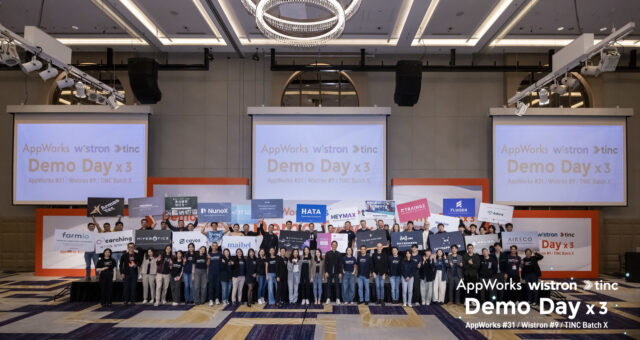
Founders, partners, and mentors gathered for AppWorks Demo Day #31 in Singapore

A defining characteristic of this cohort is its operator depth: 54% of founders are repeat entrepreneurs, reflecting the region’s shift toward experienced builders with a track record of shipping, scaling and solving real problems in increasingly complex markets.

  1. AI and IoT Enter Real-World Deployment Across SEA

The Southeast Asia AI market is rapidly expanding with strong adoption across enterprises and SMEs. BCG estimates that AI could contribute up to USD 120 billion to regional GDP by 2027, driven by productivity gains across logistics, healthcare, finance, and infrastructure.In 2024, AI adoption among SMEs in Southeast Asia tripled from 4.2% to 14.5%, supported by a young, tech-savvy population and increasing investments in AI-ready data centers. Southeast Asia is poised to become a global AI powerhouse, with vibrant startup activity and growing collaboration between global tech leaders and local innovators accelerating ecosystem growth.

With 14 teams applying AI and IoT to commercial use cases, Demo Day #31 showcases how intelligence systems are being embedded directly into the operating fabric of Southeast Asia.

A standout example is Hivebotics (Singapore), a robotics company tackling labour shortages and operational inefficiencies across commercial cleaning and facilities management. Co-founded by Rishab Patwari and Tuan Dung, Hivebotics deploys autonomous restroom and building-cleaning robots powered by machine learning and workflow optimisation models. Hivebotics is already working with Changi Airport Group, ISS, Sodexo, Kintsugi Holdings, and Chaico Development (HK) Pte. Ltd. across Singapore, the UAE, the US, Hong Kong, and Taiwan, reflecting strong enterprise demand for automation amid labour constraints..

Another notable case is Fluid (Singapore), founded by Trasy Lou and Steven Li, is an AI B2B payments and embedded credit platform used by 3,000+ suppliers and buyers across Singapore and Malaysia. Powered by AI Finance Agents, Fluid automates reconciliation and collections while unifying underwriting and payments into a single flow, helping SMEs improve liquidity, reduce manual work, and get paid faster.

  1. Repeat Founders Strengthening Execution Readiness

A recent statistic from Bain’s e-Conomy SEA 2025 report highlights that Southeast Asia’s digital economy is projected to surpass USD 300 billion in gross merchandise value by 2025, supported by robust 15% year-on-year growth in key sectors like e-commerce, fintech, and AI. Despite funding headwinds, private tech investments have risen steadily, demonstrating resilience and execution readiness among startups.

This rising operator depth can be seen in ventures like Maibel (Singapore), a story-driven AI wellness companion designed specifically for women in Asia. Founder Mabel Loh previously built AMFIT Academy, a holistic women’s strength-training business with a 1.6K-strong community. 7 months in, Maibel’s early beta tests proved strong user stickiness. Across 100 users, the early MVP retention was triple the industry’s average. Maibel is currently in stealth mode, scaling into SEA post seed raise in June 2026.

Trainge (Taiwan) offers another case of mature operator execution. With 170+ paying gyms (including Anytime Fitness), 150K+ users, and 2,000+ verified trainers, Trainge has already achieved USD 2.5M in annual revenue in Taiwan and is now preparing for regional expansion into Singapore and Malaysia, where hybrid fitness adoption continues to grow.

This type of founder depth, operational experience, cross-industry pivoting, and cultural insight, reflects the rising calibre of founders in Southeast Asia’s next wave of tech innovation.

  1. Southeast Asia as the Primary Market

As Southeast Asia’s digital adoption accelerates, 12 startups in this cohort are building specifically for the region’s most urgent gaps, financial access, mobility, travel infrastructure, authentication, and digital services, while showing clear signals of revenue quality, regulatory understanding and cross-border scalability.”

Among them is Hata (Malaysia), founded in Malaysia by David Low, KK Chong and Darien Ng, a regulated digital asset exchange enabling fiat-to-crypto trading in both MYR and USD. With 200,000 registered users and USD 26 million in assets under custody, Hata is emerging as one of Malaysia’s most trusted compliant on-ramps for Web3 adoption.

Parkit (Malaysia), founded by Kyan Liew, is a high-growth SEA mobility operator tackling Malaysia’s persistent parking infrastructure inefficiencies. Beyond parking, Parkit now offers mobility solutions including insurance services, serving over 40,000 registered users with access to 300,000 daily MRT commuters using their infrastructure. With over 30,000 paying customers, and B2B clients like Samsung and Malaysia Mass Rapid Transit, Parkit has grown to generate USD 4M in annual revenue through a mix of enterprise and consumer channels.

Founded by KaKit Chen, LegitApp (Canada) is another start up gaining momentum with its AI-powered luxury authentication engine, which combines expert verification with automated precision. Now expanding into Southeast Asia, LegitApp processes 3,000 daily authentication checks for over 2 million users across platforms such as TikTok Shop and Carousell, generating USD 3M in annual revenue.

Also noteworthy is HeyMax (Singapore), founded by Joe Lu, is a traveller rewards aggregator tackling the region’s fragmented loyalty landscape. With over 150,000 users, and over 800 merchant partnerships with the likes of Japan Railways East, Cathay Pacific, Singapore Airlines, Qatar Airways, Trip.com, KKDay, Amazon.sg, Octopus HK and Klook, HeyMax has achieved USD 6M ARR and 45,000 MAU, consolidating a fragmented rewards landscape for everyday travellers.

  1. A New Frontier for Web3 & DePin

Demo Day #31 also highlights a dynamic wave of Web3 and decentralised physical infrastructure (DePin) projects that move beyond speculation toward tangible real-world applications. These startups are pioneering next-gen infrastructure solutions that leverage blockchain and AI to unlock new efficiencies and accessibility in traditionally siloed industries.

Juic3 Labs (Taiwan), founded by Ramos Chang and RD Yu, is building self-balancing distributed battery networks designed to stabilise and decentralise future energy grids. The company has already secured three key energy partners across Battery, EPC, and EMS sectors, supporting 2.8MWh of battery capacity deployments across Taiwan. 

Meanwhile, Singular (Hong Kong), founded by Terrence Hooi, is democratising access to top-tier private equity through fractionalised on-chain investment infrastructure. With 55,000+ registered users, over USD 2 million processed, and a USD 200 million deal pipeline, Singular is opening institutional-grade opportunities, such as SpaceX, OpenAI, and Anduril, to a new generation of global investors through compliant Hong Kong structures.

Auki Labs (Hong Kong), founded by Nils Pihl and Santeri Aramo, is building the real world web, making physical spaces browsable, searchable and navigable to AI and robots. With over 1000 locations signed up, Auki is already making millions in ARR providing AI copilots for physical labor running on phones, smart glasses and robots, and is projecting 100,000 locations connected by the end of 2028.

These ventures underscore Southeast Asia’s growing role as a regional hub for pragmatic Web3 and DePin innovation, fueled by increasing regulatory clarity, investor interest, and the region’s innate suitability for decentralised infrastructure, given its young population, mobile penetration, and infrastructure gaps. 

According to McKinsey, Southeast Asia is attracting significant investments in digital infrastructure and blockchain technology, reflecting its leadership in Asia’s emerging tech economy. Backed by strong capital inflows and active startup ecosystems, the region has become a recognised hub for early-stage Web3 innovation and infrastructure investment.

Alyssa Chen, Principal of the Accelerator Arm, AppWorks said, “Founders in Southeast Asia are entering a more grounded, experience-driven phase, and this cohort reflects that shift. Many have built before, they understand customer pain points, cross-border realities, and what it takes to operationalise AI, IoT, and on-chain systems in the real world. Demo Day #31 is an opportunity for investors to meet operators already demonstrating real traction across the region.

“As we look toward AW#32, we’re especially supporting founders in three verticals shaping Asia’s next decade: Manufacturing AI, where Taiwan’s supply chain gives builders a real advantage; Defence Tech, where dual-use innovation is rapidly expanding; and On-Chain Banking, as financial infrastructure becomes increasingly programmable. No matter the specific product you’re building, AppWorks is a strategic partner for entering Taiwan and scaling across Asia.”

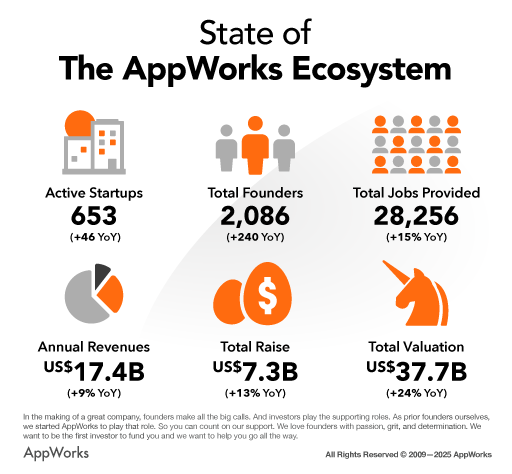
Across all cohorts, the AppWorks community now includes 653 active startups, founded by 2,086 entrepreneurs across markets such as Singapore, Taiwan, Hong Kong, Indonesia, Malaysia, Vietnam and beyond. These companies have collectively raised US$7.3 billion, achieved a combined valuation of US$37.7 billion, and generated US$17.4 billion in annual revenues, while employing 28,256 people worldwide.

This continued expansion underscores the strength of AppWorks’ regional network and the growing maturity of Southeast Asia’s digital ecosystem. With new ties formed this year, including investment partnerships with KVIC (Korea Venture Investment Corp) and Jelawang in Malaysia, the community is deepening its cross-border capabilities and accelerating connectivity across Greater Southeast Asia.

Below is the full list of pitching teams showcased at AppWorks Demo Day #31 Singapore, representing some of the most driven and forward-looking builders in the region.

# Company Country/Market 1‑line description URL
1 HeyMax SG Traveller’s rewards aggregator. https://heymax.ai
2 Fluid SG AI-powered B2B payment platform with credit built in. https://www.gofluid.io/
3 Alpha Story SG Forecasting and executing on digital narratives 24-7. alphastory.co
4 Hivebotics SG AI-powered robot for commercial restroom and facility cleaning. www.hivebotics.tech
5 Maibel SG Story-driven AI wellness companion for women. https://www.maibel.com
6 Singular HK On-chain access to fractional shares in world-class private equity. https://singulardex.com
7 Hata MY A licensed Malaysian digital asset exchange for fiat-to-crypto trading in MYR and USD. https://hata.io/home
8 Parkit MY Smart parking infrastructure for property owners and businesses. www.parkitmy.com
9 Plandora SG Trusted travel plans with AI real creator twins. plandora.com
10 LegitApp CA Luxury authentication, built on expert analysis and AI precision https://legitapp.com/
11 Auki Labs HK AI copilots for physical spaces, running on the real-world web. www.auki.ai
12 Klipy HK AI executive secretary for high touch professionals. http://klipy.ai/
13 Adora JP AI app protecting kids from cyberbullying and online predators. https://www.adora-app.com/
14 Trainge TW All in one fitness platform for both individual and gyms trainge.com
15 AMMO UK AI powered community management. https://www.ammoai.io/
16 Juic3 Labs TW Self-balancing grid powered by distributed battery networks. https://juic3.xyz/

AppWorks Secures Investment from KVIC, Launches Korean Accelerator Cohort to Help Startups Go Regional

AppWorks, a leading startup accelerator and VC firm headquartered in Taiwan, has signed an MOU with Korea Venture Investment Corporation (KVIC) to strengthen support for Korean startups. With KVIC’s strategic commitment into AppWorks Fund IV, AppWorks and KVIC will work together to help Korean founders access new markets, capital, and networks across Asia—empowering them to scale beyond Korea and compete on the global stage.

AppWorks is launching a Korean cohort to accelerate cross-border expansion

AppWorks Accelerator—the renowned startup accelerator originated in Taiwan and has since expanded across Asia—has built its alumni network the region’s largest founder community of 624 active startups and 2,029 founders, and will soon launch a Korean cohort for growth-stage startups ready to expand beyond their home market. Admitted startups will gain access to AppWorks’ valuable mentorship and connection to key strategic partners—including leading regional VCs and top-tier corporates from key sectors such as telecom, world-class electronics manufacturers driving the AI supply chain, cutting-edge media companies, and leading retail players to fast-track their entry into Taiwan, Southeast Asia, and beyond. More importantly, they will join AppWorks’ alumni network across Asia, pioneering frontier technologies such as AI and IoT, while connecting with the corporate partners to accelerate growth and collaboration. 

AppWorks connects Korean founders to one of Asia’s most vibrant startup ecosystems and network for capital & strategic partnership.

Founded by one of Taiwan’s most successful and influential founder-turned-investors, Jamie Lin, in 2009, AppWorks has since built a thriving pan-Asia community of 2,029 founders and 624 active startups, all together valued at $32.1 billion and pulling $16.3 billion in annual revenues.  These companies span across diverse tech sectors. Built by founders, for founders, this community thrives on peer learning, shared networks, and collaboration. By joining, Korean founders gain a platform to scale beyond their home market and accelerate their path from local champions to regional leaders. 

Taiwan is a strategic market, profitability center, and AI hub for startups

Taiwan is quickly becoming a leading hub for AI, with strong ties to the world’s semiconductor supply chain and a growing network of AI startups and corporates. AppWorks connects founders to key industry players and corporates eager to adopt AI and IoT solutions. For Korean startups in AI, Taiwan provides exceptional access to advanced technology and a rapidly expanding market, offering a solid base to grow regionally and globally.

In addition to its strategic position within the AI supply chain, Taiwan is also an ideal market for consumer-facing startups. With strong purchasing power supported by a high GDP per capita of US$34K, and a digitally savvy population eager to try new products, Taiwan serves as both a testbed and a profitability center, where startups can refine their business models and unit economics before scaling to larger markets.

Global players have already proven Taiwan’s strategic value. Coupang selected Taiwan as one of its first overseas markets, quickly gaining traction due to high average order value, dense urban populations, and strong local demand for Korean products in beauty, F&B, and fashion. LINE has built Taiwan into one of its strongest markets outside Japan, reaching nearly the entire population with over 20 million active users. Today, LINE operates as a true super-app, offering messaging, payments, banking, and media services woven into everyday life.

For Korean founders, Taiwan offers both the accessibility of a nearby market and the growth potential of a leading AI ecosystem, making it a powerful bridge from Korea to the broader Southeast Asian region.

AppWorks is doubling down on Korea’s fast-growing tech ecosystem

In recent years, AppWorks has steadily nurtured a growing community of Korean founders, backing ambitious startups and supporting their growth beyond domestic borders. With partnership with KVIC, AppWorks is doubling down—providing Korean entrepreneurs with the networks, capital, and regional know-how they need to scale across Asia.

AppWorks, a leading regional VC with a proven investment track record

Alongside its accelerator, AppWorks manages four venture capital funds with US$370M total funds raised, investing from seed to Series C stage startups. AppWorks has invested in more than 100 companies, including category leaders such as Lalamove, Carousell, ShopBack, KKday, 91APP, 17LIVE, Animoca Brands, and Dapper Labs/Flow. Its portfolio has produced 6 IPOs, 8 IEOs, 1 hectocorn, 2 decacorns, and 8 unicorns—cementing AppWorks’ position as one of Asia’s most impactful founder communities and VC platforms.

AppWorks and KVIC, together, share a commitment to helping Korean startups grow into global players

Jessica Liu, Partner leading AppWorks’ initiatives in Korea:

“We are excited to partner with KVIC to empower Korean founders. Korea is home to incredible founders and culture, and with the right networks across Asia, we believe these startups can grow into the next wave of regional and global champions.”


Less is More! The Power of Simplicity in 91APP’s 10-year journey from start to a successful IPO


Nathan Alexander, Associate
Nathan joined AppWorks in 2024 as an Associate in the Southeast Asia Arm, dedicated to meeting and supporting founders in the region. He brings forth over 7 years of experience in startup advisory, investments and M&A. He started his career at PwC Indonesia where he was first exposed to the investment world and developed his initial acumen for analyzing companies. In 2021, Nathan moved to the venture capital industry, taking on the position of Senior Analyst at Alpha JWC. In his most recent role, Nathan served as the Head of Investments for Telkomsel Ventures where he focused on sourcing startups and underwriting investments for Telkomsel, Indonesia’s largest telecom operator.

It might be uncomfortable but less is often more in making a tech product. In this article, I want to highlight a company in our ecosystem that grew rapidly not by piling on features, but by consciously removing complexity.

Why Simplicity Matters: Learnings from 91APP

Here’s something founders often overlook: users don’t actually crave more features; they crave less friction. Adding more features might sound impressive, but every extra click, screen, or step can turn users away.

I see a strong case of 91APP, one of the startups in our community that had successfully gone IPO in Taiwan. 91APP is a storefront SaaS solution for merchants. Unlike many other solutions that overwhelm merchants with complicated setups, convoluted integrations, and steep learning curves, 91APP built their entire platform with one core principle: make omnichannel retail ridiculously easy. No complex integrations, no tech-heavy setup, just effortless retail management.

91APP helps merchants to quickly create a fully functional online store/website and branded mobile app within days, sparing them all technical complexities. Its unified, simple dashboard integrates everything, from online and physical retail to payments and marketing channels, allowing brands to manage their entire omnichannel retail experience all in one platform.

91APP’s success stems from its deliberate simplification of complex retail processes. The platform makes it easy for anyone, even non-tech-savvy merchants to quickly launch and manage an omnichannel retail experience. But 91APP’s simplicity mindset extends beyond just the product:

  • Intuitive User Interface: Easy-to-navigate interfaces with clear, jargon-free language.
  • Straightforward Pricing: Transparent, simple subscription models with no hidden fees.
  • Seamless Integrations: Effortless OMO integration to sync inventory, member data, employee performance, and loyalty programs across their online store and physical shops with ease, eliminating the need for manual management after launching.

By deeply understanding their customers, 91APP added a simple built-in referral mechanism, giving each store staff a unique code that earns them a commission on sales from both e-commerce and physical stores. This OMO integration not only boosts staff bonuses but also encourages them to embrace digital channels to maintain customer influence. Many businesses benefited a lot through increased sales performance after adopting this straightforward, yet highly effective feature. This enables 91APP’s merchants to scale faster and spend less time on problems that don’t move the needle.

Timberland was struggling to unify their offline and online operations. 91APP’s OMO (Online-Merge-Offline) solution allowed Timberland to integrate inventory, member data, and loyalty programs across both their online store and physical shops, eliminating the need for manual management. After implementing this solution, Timberland saw 70% of online sales from the brand’s official e-commerce, and their OMO members spent twice as much as single-channel customers. 

91APP’s success demonstrates that simplicity is not just about removing unnecessary features—it’s about deeply understanding user needs and creating an experience that minimizes friction. Their approach shows that when technology is simplified and made intuitive, it can lead to faster growth, higher engagement, and stronger customer loyalty—proving us one thing: simplicity matters.

Keeping Simplicity in the Age of AI

Talking about product development right now would be incomplete if we don’t consider AI. The truth is AI brings immense potential and…complexity. 91APP recognized that adding AI shouldn’t mean adding friction. They integrated AI silently and intuitively:

  • Retail AI Jooii: Automatically recommends the best pricing and promotions using real-time shopper data, no manual setup, just smart suggestions built into the dashboard.
  • One-Click Copywriting: Generates product descriptions and ad copy in seconds, removing the need for writing or marketing expertise.
  • Smart Insights: Converts raw data into clear, actionable reports, so even non-technical users can make fast, informed decisions without digging through spreadsheets.

The beauty of 91APP’s approach here is they make AI feel like part of the background, not the focus. Instead of overwhelming users with tech, they’ve built tools that simply work, helping merchants with things like pricing or copywriting without adding complexity. That’s the real power of AI: when it becomes invisible, solving big problems without anyone noticing. It’s proof that even in the age of AI, simplicity isn’t just possible, it’s the best way to grow.

Why simplicity is harder than it looks


When I found out the power of simplicity, then the next question would be: if simplicity is so valuable, why not more companies do it? People often hear “keep it simple” and nod along, until they try to do it. On paper, stripping features sounds easy. In practice, it’s one of the hardest things a company can pull off. I tried to dig deeper and found there are at least three main reasons why it’s difficult to achieve.

First, simplicity means saying “no” over and over. It’s easy to keep adding features because every “yes” feels like progress. But each “no” risks disappointing a customer, investor, or salesperson. Most companies simply don’t have the courage and discipline.

Second, simplicity isn’t cheap. Behind 91APP’s’s easy storefront are years of hidden engineering effort. It takes huge technical depth, custom infrastructure, optimized code, and endless tweaking to make complex technology feel invisible. It’s easier to expose complexity than hide it. The shorter the grass, the deeper the root.

Third, simple products must be opinionated. A customer-centric founder will know exactly what their customer needs. 91APP deeply understood the needs of merchants and how they wanted to manage omnichannel retail, so they built a platform that streamlined the process and removed unnecessary complexities. This deep understanding of their customers allowed them to focus on the core value they were delivering, even if it meant overlooking other potential use cases. Many companies fail to be so customer-obsessed, and that lack of focus can lead to overcomplicated products that don’t truly address what users want or need.

Simplicity only looks easy from the outside. It actually requires cultural discipline, technical depth, and a customer-centric mindset. Few teams are willing or able to invest in all three, which is why true simplicity remains a competitive moat rather than a commodity.

Conclusion

The big lesson here is clear: complexity might seem impressive, but simplicity holds real value. Founders are often tempted by new technologies, mistakenly believing complexity equals sophistication. Yet, the real winners succeed precisely because they reject unnecessary complexity and maintain relentless focus on their users’ needs.

But embracing simplicity isn’t easy, it’s incredibly difficult. It demands the courage to say “no” repeatedly, even when it disappoints stakeholders. It requires deep technical mastery to hide complexity beneath the surface. And it needs bold, opinionated decisions coming from deep understanding of the customers, which will clearly define the product’s direction, despite the risk of alienating some users and stakeholders.

True simplicity is a competitive advantage precisely because it’s so hard to achieve. It involves deliberate cultural discipline, constant technical refinement, and unwavering commitment. When done right, simplicity doesn’t just grow businesses, it transforms them.


AppWorks 基金為何投資:周益鑫,JTCG創辦人 (AW#13)

從大學生寫 App,到打造雙引擎的創業者

JTCG 的創辦人周益鑫 (James) 是 AppWorks 加速器第 13 屆校友,也是少數同時具備產品、成長與企業銷售全方位能力的創業者。2016 年加入加速器之後,讓他在創業初期便透過豐富的社群活動結識許多同後屆的創辦人與導師,之後更進一步加入 AppWorks「六次方」社群,與 20–30 人規模的新創 CEO 定期討論招募、薪酬結構與營運難題,讓他不論在招募、募資或是找客戶,都能從社群中獲得支持。

在大學期間,他就打造了 Colorgy,一款幫助大學生整理課表與社交互動的 App。這產品最早從他自己手動匯入大學課表開始,一邊寫程式、一邊和同學測試,不斷修正介面與使用流程。他發現大學生其實對社交更感興趣,課表只是入口,因此他把焦點放在社群功能設計上,比如能看到同學選課、揪團開課等模組,讓用戶之間自然形成互動。他也從早期的數據中觀察到,不同科系的使用習慣差異極大,於是設計了模組化的彈性架構,以支撐多樣化需求。 Colorgy 最高曾達到 200 萬註冊用戶,深受大學生族群歡迎,整個過程讓 James 累積了完整的產品開發與使用者研究歷練。

後來他注意到法國的新創 Zenly 正在崛起,做的是即時地圖分享與朋友定位的社交 App。因為經營過大學生課表產品,James 對這個年齡層的生活模式與校園擴散節奏非常熟悉,他敏銳地意識到 Zenly 如果能搭配台灣校園的地推與產品優化,有機會快速打開市場。於是他主動寫信給 Zenly 的創辦人,分析台灣市場的成長潛力與校園推廣策略,爭取加入團隊。他不只提出想法,還親自拉了一群學生實測不同的 onboarding 流程與功能 A/B 測試,最後正式接手台灣與韓國的在地化與增長工作。短短一年內,他帶隊把月活用戶從 5 萬推升到 120 萬,並把這套成長模式複製到韓國,實際操演一次跨國市場的 go-to-market 策略。

從大學就開始創業,也讓他洞悉自己對於企業正規軍的策略理解不足。當他看到 LINE 要收購 Choco TV,覺得這是一個難得的機會,可以親身觀察國際公司是怎麼做併購與整合的。剛好 Choco TV 的創辦人 Davidd 也是Colorgy 的天使投資人,兩人相談合拍下,James 就加入整合團隊。參與了整個過程,從資料與技術對接、流程重新設計,到如何讓兩邊團隊建立共識、對齊預期。這段經歷讓他對大企業如何運作、如何協調文化落差有了第一手的理解,這些經驗也成為他日後共同創辦 MetaCRM、處理企業銷售與 B2B 合作的重要底氣。

James 能從零打造產品,也能在面對大型企業與通路夥伴時穩健談判,並且擁有實戰經驗:從一個大學生寫 App 的工程師、到主導國際產品落地、再到參與企業併購與跨部門整合,最後又成立 B2B SaaS 軟體新創。些經驗讓 JTCG 能夠同時運作 PLG(product-led growth)與 SLG(sales-led growth)這兩種成長引擎,使其 AI 產品能快速打入市場並有效擴張。

解痛點、建資料飛輪,打造 AI 客服的持續競爭優勢

James 在經營 Zendesk 代理商期間,完整接觸企業客服流程,從大量客服工單與報表看見了兩個關鍵問題。第一,傳統規則式聊天機器人resolution rate (解決率,指顧客問題能被解決) 通常不到一成,而客服人力卻有七成時間進行重複「查詢系統資料、確認資料、回覆客戶」的工作;其二,多數國際大型客服 AI 工具雖功能強大,但價格昂貴且不夠接地氣,對本地語言與系統整合也缺乏彈性。這些觀察讓他意識到一個結構性機會:當地的 SI 可以造自己的 AI agent,取代國際 SaaS 工具,取代昂貴的國際 SaaS 預算,並提供更貼近需求的在地服務。

這些第一線經驗促成了 Raccoon AI 的誕生。機器人不僅能對話,更能直接喚用「查訂單、取消、退款」等後端 API,把客戶真正需要的動作一次完成。舉例來說,顧客詢問『我的訂單出貨了嗎?』時,Raccoon AI 不只回覆流程,而是會即時查詢電商後台的訂單管理系統,調出該訂單狀態,確認是否已出貨並提供物流單號,若尚未出貨還能進一步協助取消或改期。這是與傳統規則式聊天機器人最大不同,透過串接公司後台資料庫讓機器人有更多 context ,進而提高工單 resolution rate。

Raccoon AI 自推出以來在實際專案中展現出明顯差異化優勢。以台灣電商與旅遊業為例,系統可自動解決六成以上的客服工單,而同類 LLM chatbot 的平均 resolution rate 通常不及三成。這部分優勢來自於 Raccoon 長期累積的在地產業語料,例如電商常見的「出貨查詢」「修改地址」「訂單取消」等對話範式,甚至包含繁體中文語境下的客服語氣、商品分類邏輯與品牌風格調性,這些內容被整理成超過一百萬筆的向量知識庫,能讓 AI 在第一天上線就接近人類客服的回答品質。加上即將推出的 low code 客服流程編輯器(V2 版本,目前進入 Beta 測試階段),新客戶可在兩天內完成概念驗證,並預期在四週內完成正式上線。

每解決一張客服工單,系統會將意圖、回答與品牌語調回寫至該客戶專屬的向量知識庫,進一步優化客服機器人的涵蓋能力與回應品質。這種「資料飛輪」機制讓每家商戶的 AI 隨使用逐步成長,搭配 Raccoon 極短的導入時間,能快速開始累積語料、加速學習與優化,有效鞏固其 first mover advantage。

另一方面,James 已與 Zendesk、91APP、Omnichat、與 Shopline 等夥伴建立合作關係,也為 JTCG 建立起穩定且具規模化潛力的銷售管道。這些通路目前已貢獻 20–30% 的潛在客戶來源,讓團隊得以專注在產品與語料的持續打磨,不必從零開始冷啟動。

透過資料飛輪、快速導入與通路槓桿的三方協作,JTCG 已建立一套具有持續複利效應的擴張模式,清楚展現其在效率與速度上的結構性領先。

把握時機,搶占生成式 AI 客服的成長浪潮

相較於歐美大型客服 SaaS,JTCG 的優勢在於更「接地氣」。國際客服平台在亞洲的本地化落地仍有落差,例如多數歐美主流客服工具並不會優先支援 LINE 或台灣主流電商平台,對本地企業而言導入門檻相對較高。因此在客服與售後支援領域,JTCG 面對的是一個成熟產品未充分覆蓋的市場,正是一個可以快速切入、卡位成為關鍵供應商的機會。

我們在 2025 年第一季看到,JTCG 交出了年成長超過 100%的成績。基於團隊過往累積的產品能力與渠道優勢,以及生成式 AI 正全面改寫客服產業的市場時機,我們選擇領投 JTCG 的 Pre‑A 輪,加速 Self-Onboarding 產品開發與銷售團隊的建置,並成為亞洲 AI 客服的領先者。歡迎任何有意導入 AI 客服、自動化售後流程的品牌與 JTCG 或 AppWorks 聯繫,攜手打造新一代的客服體驗。